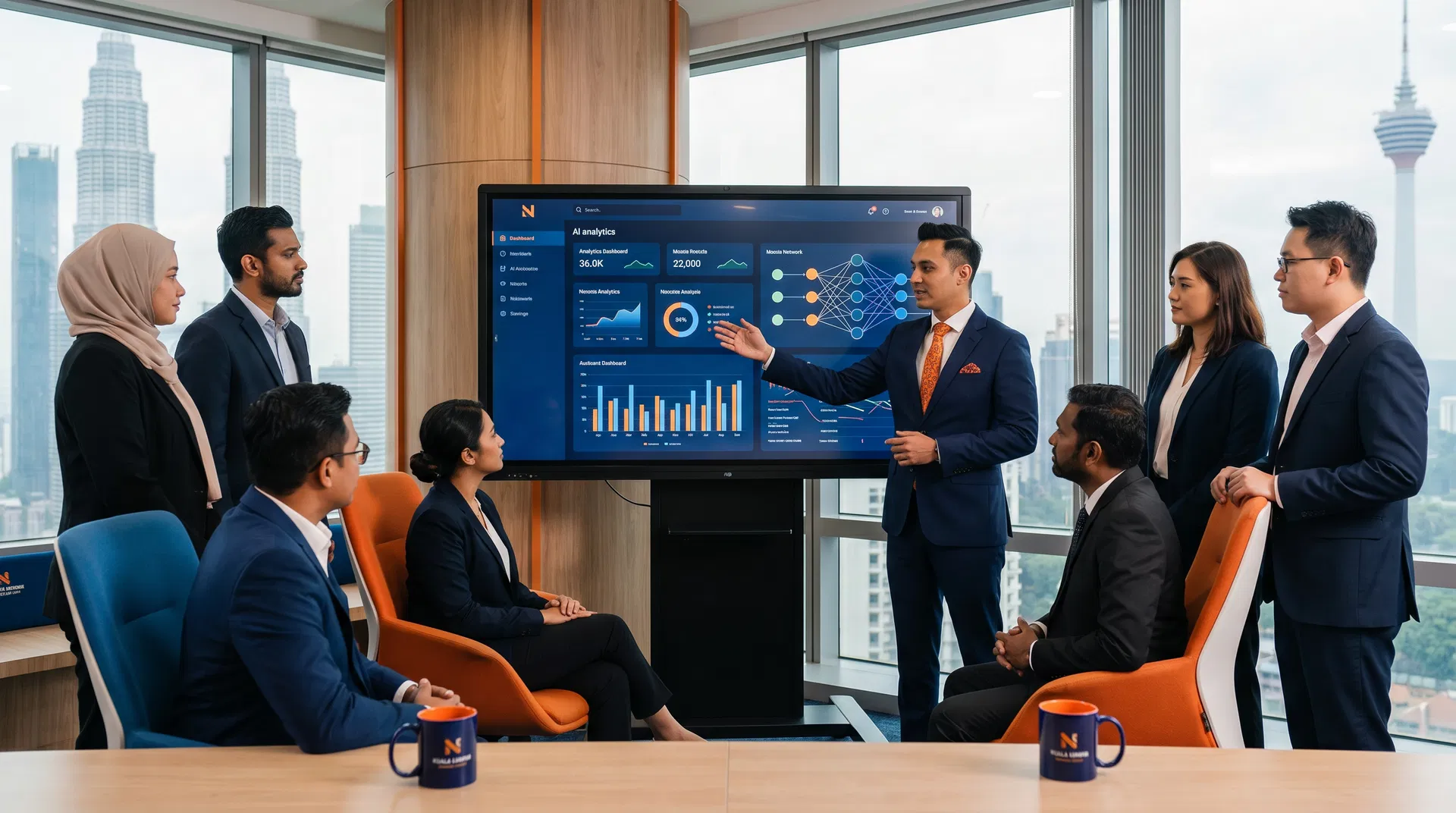
Quick Answer: AI corporate training in Malaysia uses artificial intelligence to create personalized, data-driven, and efficient learning experiences. It helps companies close skill gaps, boost employee performance, and adapt to new industry demands by tailoring content to individual needs and providing real-time feedback.
This is the textbook answer. The real-world nuances are what we break down next.
Introduction
Keeping your team’s skills sharp is a constant battle. Traditional, one-size-fits-all training programs often miss the mark, leaving employees disengaged and skill gaps wide open. You invest time and resources, but the ROI is disappointing. It feels like you’re training for the sake of training, without seeing real performance improvements. This is a common frustration for HR managers and business leaders in Malaysia, where the pace of technological change is relentless.
What if you could deliver the right training, to the right person, at the right time? This is not a far-fetched dream; it's the reality that AI-powered corporate training offers. By moving beyond generic modules and embracing intelligent, adaptive learning platforms, Malaysian companies can finally bridge the gap between training and tangible business outcomes.
AI vs Traditional Training: A Quick Comparison
| Feature | Traditional Training | AI-Powered Training |
|---|---|---|
| Learning Path | Same for everyone | Personalized per employee |
| Feedback | End-of-course survey | Real-time, continuous |
| Content Delivery | Fixed schedule, classroom | On-demand, any device |
| Skill Gap Analysis | Manual assessment | Automated, data-driven |
| Scalability | Limited by trainer availability | Unlimited, instant |
| Cost per Employee | Higher (venue, travel, materials) | Lower at scale |
| Measurement | Attendance-based | Performance-based with analytics |
How AI Is Reshaping Corporate Learning
Artificial intelligence is not just another buzzword; it's a fundamental shift in how we approach workforce development. Instead of putting everyone through the same linear program, AI allows for a more dynamic and effective approach. A 2025 report by PwC found that 73% of Malaysian companies believe AI will be critical for their business success in the next five years, and corporate training is a key area of impact.
Personalized Learning Paths at Scale
One of the most significant advantages of AI is its ability to personalize learning. AI algorithms can assess an employee's current knowledge, identify their specific skill gaps, and then create a unique learning path to address those needs. This means a senior manager isn't forced to sit through basic introductory content, and a new hire gets the foundational knowledge they require. This level of personalization was previously impossible to achieve at scale, but AI makes it a reality.
For example, an AI-powered system can analyze a sales team's performance data and identify that a particular group struggles with objection handling. Instead of a generic sales training for everyone, the system can automatically assign a targeted micro-learning module on that specific skill to only the employees who need it. This not only saves time but also makes the training more relevant and impactful for the individual.
Data-Driven Insights for L&D Strategy
For years, learning and development (L&D) has struggled to measure its true impact. AI changes that by providing deep, actionable insights. AI platforms can track learner engagement, completion rates, and even performance improvements back on the job. This data helps HR managers understand what’s working and what isn’t, allowing them to refine their training strategy for better results. This data-driven approach transforms L&D from a cost center to a strategic business partner.
As stated by Dr. Dave Ulrich, a globally recognized HR expert, "HR is not about being human, but about helping humans be better." AI provides the tools to do just that, by giving L&D professionals the data they need to make strategic decisions, rather than relying on guesswork. This allows for a continuous improvement cycle where training programs are constantly optimized for maximum impact.
Immersive and Engaging Learning Experiences
Traditional e-learning can be a passive, uninspiring experience. AI is making learning more interactive and engaging. AI-powered simulations can create realistic scenarios for employees to practice new skills in a safe environment. For instance, a customer service representative can practice handling difficult conversations with an AI-powered chatbot that adapts its responses based on the employee's input. This creates a safe space to fail and learn without real-world consequences.
This kind of immersive learning is far more effective than simply reading a manual or watching a video. It builds confidence and ensures that employees are truly prepared for real-world challenges. The ability to practice in a realistic setting is a game-changer for skills that require a high degree of interpersonal interaction.
Challenges and Considerations for AI Implementation
While the benefits of AI in corporate training are clear, successful implementation requires careful planning and consideration. It's not as simple as just buying a new piece of software. Malaysian companies need to be aware of the potential challenges and proactively address them to ensure a smooth transition and maximize their return on investment.
One of the primary challenges is data privacy and security. AI systems require access to employee data to personalize learning paths and track progress. It is crucial to ensure that any AI platform you use complies with Malaysia's Personal Data Protection Act (PDPA). Companies must be transparent with employees about what data is being collected and how it is being used. Building trust is essential for successful AI adoption.
Another key consideration is the potential for algorithmic bias. If the data used to train an AI system is biased, the AI itself can perpetuate and even amplify those biases. For example, if historical training data reflects a bias towards promoting male employees into leadership roles, an AI system might inadvertently recommend more leadership training for men than for women. It is vital to work with technology partners who are committed to ethical AI and have robust processes for identifying and mitigating bias.
Finally, there is the human element. The introduction of AI can be met with resistance from employees who are fearful of being replaced or who are uncomfortable with new technologies. Change management is a critical component of any AI implementation strategy. It's important to communicate the benefits of AI for employees – such as the opportunity to develop new skills and advance their careers – and to provide them with the support and training they need to feel comfortable using the new tools.
Getting Started with AI in Your Training Program
Adopting AI in corporate training doesn't have to be an overwhelming process. Here’s a simple, three-step approach for Malaysian companies:
- Start Small with a Pilot Program: Identify a specific business challenge or a single department to start with. This could be improving the onboarding process for new hires or upskilling a team on a new software. A successful pilot will build momentum and demonstrate the value of AI to stakeholders.
- Leverage HRD Corp Claimable Courses: The Malaysian government, through HRD Corp, actively supports the upskilling of the workforce. Many AI-related training programs are HRD Corp claimable, making it a cost-effective way to get started. Platforms like TrainerLink make it easy to find and compare certified training providers that specialize in AI for corporate development.
- Choose the Right Technology Partner: Select an AI learning platform that integrates with your existing systems and is user-friendly for both administrators and employees. Look for providers who have a strong track record and can offer local support in Malaysia.
Frequently Asked Questions
What is AI in corporate training?
AI in corporate training involves using artificial intelligence technologies to create more effective, personalized, and data-driven learning experiences for employees. It moves away from a one-size-fits-all approach to one that adapts to individual learner needs.
How is AI used in training and development?
AI is used in various ways, including personalizing learning paths, providing real-time feedback, creating immersive simulations, and analyzing learning data to measure the impact of training on business performance.
What are the benefits of AI in training?
The key benefits include increased employee engagement, faster skill acquisition, improved knowledge retention, and the ability for L&D teams to make data-driven decisions. Ultimately, it leads to a more skilled and agile workforce.
Conclusion
The transformation of corporate training is here, and AI is leading the charge. For Malaysian companies, embracing AI is no longer a choice but a necessity to stay competitive. By moving towards personalized, data-driven, and engaging learning experiences, you can empower your employees with the skills they need to succeed in the future of work.
Ready to explore how AI can transform your company’s training strategy? Visit TrainerLink to discover a wide range of HRD Corp claimable AI training programs from certified providers in Malaysia.
AI Summary: This article explains how Artificial Intelligence (AI) is revolutionizing corporate training in Malaysia. The key finding is that AI enables personalized, data-driven learning that is more effective than traditional methods. This matters for Malaysian HR managers and business owners because it offers a clear path to closing skill gaps and improving workforce performance in a rapidly changing digital landscape.